Judea Pearl (Hebrew: יהודה פרל; born September 4, 1936) is an Israeli-American electrical engineer, computer scientist and philosopher, best known for championing the probabilistic approach to artificial intelligence and the development of Bayesian networks (see the article on belief propagation). He is also credited for developing a theory of causal and counterfactual inference based on structural models (see article on causality). In 2011, the Association for Computing Machinery (ACM) awarded Pearl with the Turing Award, the highest distinction in computer science, "for fundamental contributions to artificial intelligence through the development of a calculus for probabilistic and causal reasoning". He is the author of several books, including the technical Causality: Models, Reasoning and Inference, and The Book of Why, a book on causality aimed at the general public. Judea Pearl is the father of journalist Daniel Pearl, who was kidnapped and murdered by terrorists in Pakistan connected with Al-Qaeda and the International Islamic Front in 2002. == Biography == Judea Pearl was born in Tel Aviv, British Mandate for Palestine, in 1936 to Eliezer and Tova Pearl, who were Polish Jewish immigrants, grew up in Bnei Brak. His grandfather Chaim Pearl was one of Bnei Brak's founders. He is a descendant of Menachem Mendel of Kotzk on his mother's side. After serving in the Israel Defense Forces and joining a kibbutz, Pearl decided to study engineering in 1956. He received a B.S. in electrical engineering from the Technion 1960. That same year, he emigrated to the United States and pursued graduate studies. He received an M.S. in electrical engineering from the Newark College of Engineering (now New Jersey Institute of Technology) in 1961, and went on to receive an M.S. in physics from Rutgers University and a PhD in electrical engineering from the Polytechnic Institute of Brooklyn (now the New York University Tandon School of Engineering) in 1965. He worked at RCA Research Laboratories (now SRI International) in Princeton, New Jersey on superconductive parametric amplifiers and storage devices and at Electronic Memories, Inc., on advanced memory systems. When semiconductors "wiped out" Pearl's work, as he later expressed it, he joined UCLA's School of Engineering in 1970 and started work on probabilistic artificial intelligence. He is one of the founding editors of the Journal of Causal Inference. Pearl is currently a professor of computer science and statistics and director of the Cognitive Systems Laboratory at UCLA. He and his wife, Ruth, had three children. In addition, as of 2011, he is a member of the International Advisory Board of NGO Monitor. Former Israeli Chief Rabbi, Rabbi Yisrael Meir Lau, partnered with Judea Pearl in the documentary With My Whole Broken Heart. == Murder of Daniel Pearl == In 2002, his son, Daniel Pearl, a journalist working for the Wall Street Journal was kidnapped and murdered in Pakistan, leading Judea and the other members of the family and friends to create the Daniel Pearl Foundation. On the seventh anniversary of Daniel's death, Judea wrote an article in the Wall Street Journal titled Daniel Pearl and the Normalization of Evil: When will our luminaries stop making excuses for terror?. Emeritus Chief Rabbi Jonathan Sacks quoted Judea Pearl's beliefs in a lesson on Judaism: "I asked Judea Pearl, father of the murdered journalist Daniel Pearl, why he was working for reconciliation between Jews and Muslims...he replied with heartbreaking lucidity, 'Hate killed my son. Therefore I am determined to fight hate.'" == Views == On his religious views, Pearl states that he is a "practicing disbeliever." He is very connected to Jewish traditions such as holidays and kiddush on Friday night. Pearl sits on the NGO Monitor international advisory board, a right-wing organization based in Jerusalem that reports on non-governmental organization activity from a pro-Israel perspective. == Research == Pearl is credited for "laying the foundations of modern artificial intelligence, so computer systems can process uncertainty and relate causes to effects." He is one of the pioneers of Bayesian networks and the probabilistic approach to artificial intelligence, and one of the first to mathematize causal modeling in the empirical sciences. His work is also intended as a high-level cognitive model. He is interested in the philosophy of science, knowledge representation, nonstandard logics, and learning. Pearl is described as "one of the giants in the field of artificial intelligence" by UCLA computer science professor Richard E. Korf. His work on causality has "revolutionized the understanding of causality in statistics, psychology, medicine and the social sciences" according to the Association for Computing Machinery. === Notable contributions === A summary of Pearl's scientific contributions is available in a chronological account authored by Stuart J. Russell (2012). An annotated bibliography of Pearl's contributions was compiled by the ACM in 2012. A video describing Pearl's major contributions to AI is available here. Pearl's opinion pieces, touching on Jewish identity, the war on terrorism, and the Middle East conflict can be accessed here. === Books === Heuristics, Addison-Wesley, 1984 Probabilistic Reasoning in Intelligent Systems, Morgan-Kaufmann, 1988 Pearl, Judea (2000). Causality: Models, Reasoning, and Inference. Cambridge University Press. I Am Jewish: Personal Reflections Inspired by the Last Words of Daniel Pearl, Jewish Lights, 2004. (Winner of a 2004 National Jewish Book Award) Causal Inference in Statistics: A Primer, (with Madelyn Glymour and Nicholas Jewell), Wiley, 2016. ISBN 978-1-119-18684-7 A previous survey: Causal inference in statistics: An overview, Statistics Surveys, 3:96–146, 2009. Pearl, Judea; Dana Mackenzie (2018). "The Book of Why: The New Science of Cause and Effect". Science. 361 (6405): 855. Bibcode:2018Sci...361..855.. doi:10.1126/science.aau9731. === Awards ===
Automation in construction
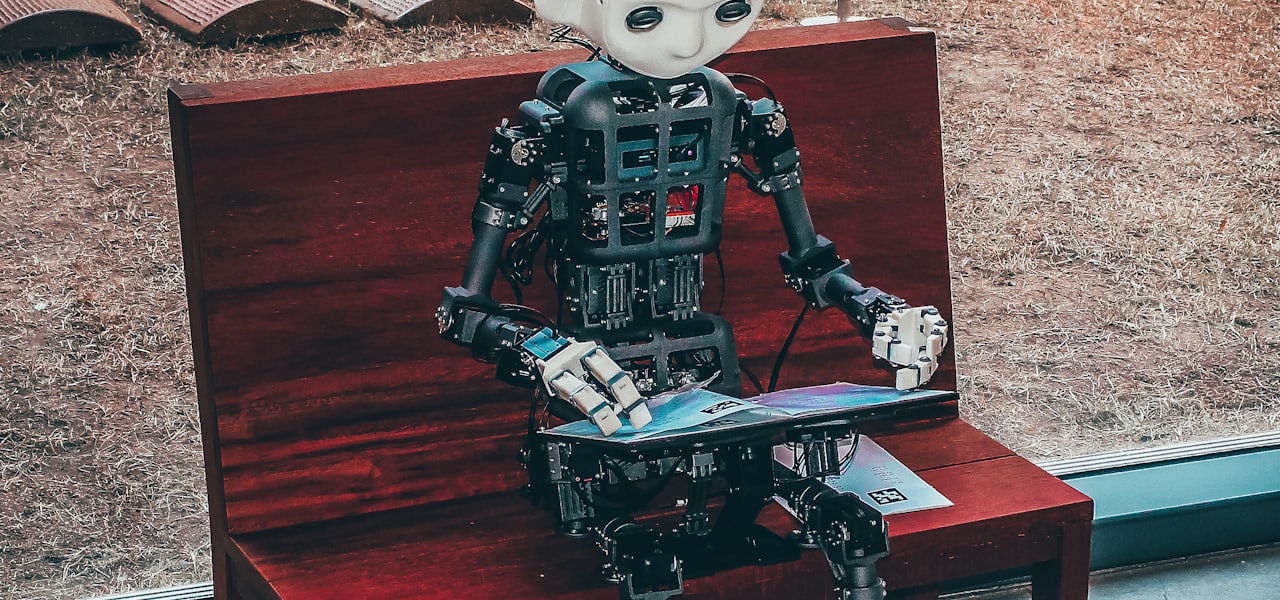
Automation in construction is the combination of methods, processes, and systems that allow for greater machine autonomy in construction activities. Construction automation may have multiple goals, including but not limited to, reducing jobsite injuries, decreasing activity completion times, and assisting with quality control and quality assurance. Some systems may be fielded as a direct response to increasing skilled labor shortages in some countries. Opponents claim that increased automation may lead to less construction jobs and that software leaves heavy equipment vulnerable to hackers. Research insights on this subject are today published in several journals such as Automation in Construction by Elsevier. == Uses of automation in construction == Equipment control and management: Automation can be used to control and monitor construction equipment, such as cranes, excavators, and bulldozers. Material handling: Automated systems can be used to handle, transport, and place materials such as concrete, bricks, and stones. Surveying: Automated survey equipment and drones can be used to collect and analyze data on construction sites. Quality control: Automated systems can be used to monitor and control the quality of materials and construction processes. Safety management: Automated systems can be used to monitor and control safety conditions on construction sites. Scheduling and planning: Automated systems can be used to manage schedules, resources, and costs. Waste management: Automated systems can be used to manage and dispose of waste materials generated during construction. 3D printing: Automated 3D printing can be used to create prototypes, models, and even full-scale building components. == Autonomous heavy equipment == Advances in sensors, machine learning, and autonomous vehicle technology have led to the development of self-operating construction equipment and retrofit systems designed to automate excavators, bulldozers, tracked loaders, skid steer loaders, and haul trucks, allowing them to perform tasks with limited human supervision. Since 2017, tech companies have developed autonomous or semi-autonomous retrofit kits that can be installed on existing construction machinery. Examples include Bedrock Robotics, Built Robotics, and SafeAI, which develop sensor and software systems that enable excavators and other earthmoving machines to operate with varying degrees of autonomy. Major equipment manufacturers have also introduced autonomous capabilities: Caterpillar and John Deere have developed autonomous or semi-autonomous systems for construction and mining equipment, including haul trucks and earthmoving machines. == Transportation сonstruction == Kratos Defense & Security Solutions fielded the world’s first Autonomous Truck-Mounted Attenuator (ATMA) in 2017, in conjunction with Royal Truck & Equipment. == Benefits of automation in construction == The use of automation in construction has become increasingly prevalent in recent years due to its numerous benefits. Automation in construction refers to the use of machinery, software, and other technologies to perform tasks that were previously done manually by workers. One of the most significant benefits of automation in construction is increased productivity. Automation can help speed up construction processes, reduce project completion times, and improve overall efficiency. For example, using automated machinery for tasks such as concrete pouring, bricklaying, and welding can significantly increase the speed and accuracy of these tasks, allowing for more work to be completed in a shorter amount of time. Another benefit of automation in construction is improved safety. By automating tasks that are hazardous to workers, such as demolition or working at height, companies can reduce the risk of accidents and injuries on site. Automation can also help to reduce worker fatigue, which can be a significant factor in accidents and mistakes. Overall, the use of automation in construction can improve productivity, reduce costs, increase safety, and improve the quality of construction projects. As technology continues to advance, the use of automation is likely to become even more prevalent in the construction industry.
Standard test image
A standard test image is a digital image file used across different institutions to test image processing and image compression algorithms. By using the same standard test images, different labs are able to compare results, both visually and quantitatively. The images are in many cases chosen to represent natural or typical images that a class of processing techniques would need to deal with. Other test images are chosen because they present a range of challenges to image reconstruction algorithms, such as the reproduction of fine detail and textures, sharp transitions and edges, and uniform regions. == Historical origins == Test images as transmission system calibration material probably date back to the original Paris to Lyon pantelegraph link. Analogue fax equipment (and photographic equipment for the printing trade) were the largest user groups of the standardized image for calibration technology until the coming of television and digital image transmission systems. == Common test image resolutions == The standard resolution of the images is usually 512×512 or 720×576. Most of these images are available as TIFF files from the University of Southern California's Signal and Image Processing Institute. Kodak has released 768×512 images, available as PNGs, that was originally on Photo CD with higher resolution, that are widely used for comparing image compression techniques.
Act! LLC
ACT! (previously known as Activity Control Technology, Automated Contact Tracking, ACT! by Sage, and Sage ACT!) is a customer relationship management and marketing automation software platform designed for small and medium-sized businesses. It has over 2.8 million registered users as of December 2014. == History == The company Conductor Software was founded in 1986, in Dallas, Texas, by Pat Sullivan and Mike Muhney. The original name for the software was Activity Control Technology; it was renamed to Automated Contact Tracking, later abbreviated to ACT. The name of the company was subsequently changed to Contact Software International and it was sold in 1993 to Symantec Corporation, who in 1999 then sold it to SalesLogix. The Sage Group purchased Interact Commerce (formerly SalesLogix) in 2001 through Best Software, then its North American software division. Swiftpage acquired it in 2013. Beginning with the 2006 version, the name was styled ACT! by Sage, and in 2010 revised to Sage ACT!. Following its 2013 acquisition by Swiftpage, it was renamed to ACT! Swiftpage. In May 2018, ACT! was sold to SFW Advisors. In December 2018, Kuvana, a marketing automation software solution, was acquired by SFW and merged with ACT! This add-on is now a complementary service to the core CRM solution. In December 2019, ACT! hired Steve Oriola as chairman and CEO. In 2020, Swiftpage changed its company name to ACT!. In March 2023, ACT! hired Bruce Reading as President and CEO. == Software == ACT! features include contact, company and opportunity management, a calendar, marketing automation and e-marketing tools, reports, interactive dashboards with graphical visualizations, and the ability to track prospective customers. ACT! integrates with Microsoft Word, Excel, Outlook, Google Contacts, Gmail, and other applications via Zapier. For custom integrations, ACT! has an in-built API. ACT! can be accessed from Windows desktops (Win7 and later) with local or network shared database; synchronized to laptops or remote officers; Citrix or Remote Desktop; Web browsers (Premium only) with self or SaaS hosting; smartphones and tablets via HTML5 Web (Premium only); smartphones and tablets via sync with Handheld Contact.
Multi-focus image fusion
Multi-focus image fusion is a multiple image compression technique using input images with different focus depths to make one output image that preserves all information. == Overview == The main idea of image fusion is gathering important and the essential information from the input images into one single image which ideally has all of the information of the input images. The research history of image fusion spans over 30 years and many scientific papers. Image fusion generally has two aspects: image fusion methods and objective evaluation metrics. In visual sensor networks (VSN), sensors are cameras which record images and video sequences. In many applications of VSN, a camera can't give a perfect illustration including all details of the scene. This is because of the limited depth of focus of the optical lens of cameras. Therefore, just the object located in the focal length of camera is focused and clear, and other parts of the image are blurred. VSN captures images with different depths of focus using several cameras. Due to the large amount of data generated by cameras compared to other sensors such as pressure and temperature sensors and some limitations of bandwidth, energy consumption and processing time, it is essential to process the local input images to decrease the amount of transmitted data. == Multi-Focus image fusion in the spatial domain == Huang and Jing have reviewed and applied several focus measurements in the spatial domain for the multi-focus image fusion process, suitable for real-time applications. They mentioned some focus measurements including variance, energy of image gradient (EOG), Tenenbaum's algorithm (Tenengrad), energy of Laplacian (EOL), sum-modified-Laplacian (SML), and spatial frequency (SF). Their experiments showed that EOL gave better results than other methods like variance and spatial frequency. == Multi-Focus image fusion in multi-scale transform and DCT domain == Image fusion based on the multi-scale transform is the most commonly used and promising technique. Laplacian pyramid transform, gradient pyramid-based transform, morphological pyramid transform and the premier ones, discrete wavelet transform, shift-invariant wavelet transform (SIDWT), and discrete cosine harmonic wavelet transform (DCHWT) are some examples of image fusion methods based on multi-scale transform. These methods are complex and have some limitations e.g. processing time and energy consumption. For example, multi-focus image fusion methods based on DWT require a lot of convolution operations, so they take more time and energy to process. Therefore, most methods in multi-scale transform are not suitable for real-time applications. Moreover, these methods are not very successful along edges, due to the wavelet transform process missing the edges of the image. They create ringing artefacts in the output image and reduce its quality. Due to the aforementioned problems in the multi-scale transform methods, researchers are interested in multi-focus image fusion in the DCT domain. DCT-based methods are more efficient in terms of transmission and archiving images coded in Joint Photographic Experts Group (JPEG) standard to the upper node in the VSN agent. A JPEG system consists of a pair of an encoder and a decoder. In the encoder, images are divided into non-overlapping 8×8 blocks, and the DCT coefficients are calculated for each. Since the quantization of DCT coefficients is a lossy process, many of the small-valued DCT coefficients are quantized to zero, which corresponds to high frequencies. DCT-based image fusion algorithms work better when the multi-focus image fusion methods are applied in the compressed domain. In addition, in the spatial-based methods, the input images must be decoded and then transferred to the spatial domain. After implementation of the image fusion operations, the output fused images must again be encoded. DCT domain-based methods do not require complex and time-consuming consecutive decoding and encoding operations. Therefore, the image fusion methods based on DCT domain operate with much less energy and processing time. Recently, a lot of research has been carried out in the DCT domain. DCT+Variance, DCT+Corr_Eng, DCT+EOL, and DCT+VOL are some prominent examples of DCT based methods.
Database
In computing, a database is an organized collection of data or a type of data store based on the use of a database management system (DBMS), the software that interacts with end users, applications, and the database itself to capture and analyze the data. The DBMS additionally encompasses the core facilities provided to administer the database. The sum total of the database, the DBMS and the associated applications can be referred to as a database system. Often the term "database" is also used loosely to refer to any of the DBMS, the database system or an application associated with the database. Before digital storage and retrieval of data became widespread, index cards were used for data storage in a wide range of applications and environments: in the home to record and store recipes, shopping lists, contact information and other organizational data; in business to record presentation notes, project research and notes, and contact information; in schools as flash cards or other visual aids; and in academic research to hold data such as bibliographical citations or notes in a card file. Professional book indexers used index cards in the creation of book indexes until they were replaced by indexing software in the 1980s and 1990s. Small databases can be stored on a file system, while large databases are hosted on computer clusters or cloud storage. The design of databases spans formal techniques and practical considerations, including data modeling, efficient data representation and storage, query languages, security and privacy of sensitive data, and distributed computing issues, including supporting concurrent access and fault tolerance. Computer scientists may classify database management systems according to the database models that they support. Relational databases became dominant in the 1980s. These model data as rows and columns in a series of tables, and the vast majority use SQL for writing and querying data. In the 2000s, non-relational databases became popular, collectively referred to as NoSQL, because they use different query languages. == Terminology and overview == Formally, a "database" refers to a set of related data accessed through the use of a "database management system" (DBMS), which is an integrated set of computer software that allows users to interact with one or more databases and provides access to all of the data contained in the database (although restrictions may exist that limit access to particular data). The DBMS provides various functions that allow entry, storage and retrieval of large quantities of information and provides ways to manage how that information is organized. Because of the close relationship between them, the term "database" is often used casually to refer to both a database and the DBMS used to manipulate it. Outside the world of professional information technology, the term database is often used to refer to any collection of related data (such as a spreadsheet or a card index) as size and usage requirements typically necessitate use of a database management system. Existing DBMSs provide various functions that allow management of a database and its data which can be classified into four main functional groups: Data definition – Creation, modification and removal of definitions that detail how the data is to be organized. Update – Insertion, modification, and deletion of the data itself. Retrieval – Selecting data according to specified criteria (e.g., a query, a position in a hierarchy, or a position in relation to other data) and providing that data either directly to the user, or making it available for further processing by the database itself or by other applications. The retrieved data may be made available in a more or less direct form without modification, as it is stored in the database, or in a new form obtained by altering it or combining it with existing data from the database. Administration – Registering and monitoring users, enforcing data security, monitoring performance, maintaining data integrity, dealing with concurrency control, and recovering information that has been corrupted by some event such as an unexpected system failure. Both a database and its DBMS conform to the principles of a particular database model. "Database system" refers collectively to the database model, database management system, and database. Physically, database servers are dedicated computers that hold the actual databases and run only the DBMS and related software. Database servers are usually multiprocessor computers, with generous memory and RAID disk arrays used for stable storage. Hardware database accelerators, connected to one or more servers via a high-speed channel, are also used in large-volume transaction processing environments. DBMSs are found at the heart of most database applications. DBMSs may be built around a custom multitasking kernel with built-in networking support, but modern DBMSs typically rely on a standard operating system to provide these functions. Since DBMSs comprise a significant market, computer and storage vendors often take into account DBMS requirements in their own development plans. Databases and DBMSs can be categorized according to the database model(s) that they support (such as relational or XML), the type(s) of computer they run on (from a server cluster to a mobile phone), the query language(s) used to access the database (such as SQL or XQuery), and their internal engineering, which affects performance, scalability, resilience, and security. == History == The sizes, capabilities, and performance of databases and their respective DBMSs have grown in orders of magnitude. These performance increases were enabled by the technology progress in the areas of processors, computer memory, computer storage, and computer networks. The concept of a database was made possible by the emergence of direct access storage media such as magnetic disks, which became widely available in the mid-1960s; earlier systems relied on sequential storage of data on magnetic tape. The subsequent development of database technology can be divided into three eras based on data model or structure: navigational, SQL/relational, and post-relational. The two main early navigational data models were the hierarchical model and the CODASYL model (network model). These were characterized by the use of pointers (often physical disk addresses) to follow relationships from one record to another. The relational model, first proposed in 1970 by Edgar F. Codd, departed from this tradition by insisting that applications should search for data by content, rather than by following links. The relational model employs sets of ledger-style tables, each used for a different type of entity. Only in the mid-1980s did computing hardware become powerful enough to allow the wide deployment of relational systems (DBMSs plus applications). By the early 1990s, however, relational systems dominated in all large-scale data processing applications, and as of 2018 they remain dominant: IBM Db2, Oracle, MySQL, and Microsoft SQL Server are the most searched DBMS. The dominant database language, standardized SQL for the relational model, has influenced database languages for other data models. Object databases were developed in the 1980s to overcome the inconvenience of object–relational impedance mismatch, which led to the coining of the term "post-relational" and also the development of hybrid object–relational databases. The next generation of post-relational databases in the late 2000s became known as NoSQL databases, introducing fast key–value stores and document-oriented databases. A competing "next generation" known as NewSQL databases attempted new implementations that retained the relational/SQL model while aiming to match the high performance of NoSQL compared to commercially available relational DBMSs. === 1960s, navigational DBMS === The introduction of the term database coincided with the availability of direct-access storage (disks and drums) from the mid-1960s onwards. The term represented a contrast with the tape-based systems of the past, allowing shared interactive use rather than daily batch processing. The Oxford English Dictionary cites a 1962 report by the System Development Corporation of California as the first to use the term "data-base" in a specific technical sense. As computers grew in speed and capability, a number of general-purpose database systems emerged; by the mid-1960s a number of such systems had come into commercial use. Interest in a standard began to grow, and Charles Bachman, author of one such product, the Integrated Data Store (IDS), founded the Database Task Group within CODASYL, the group responsible for the creation and standardization of COBOL. In 1971, the Database Task Group delivered their standard, which generally became known as the CODASYL approach, and soon a number of commercial products based on this approach entered the market. The CODASYL approach of
Couch to 5K
Couch to 5K, abbreviated C25K, is an exercise plan that gradually progresses from beginner running toward a 5 kilometre (3.1 mile) run over nine weeks. == Operations == The Couch to 5K running plan, also known as C25K, created by Josh Clark in 1996, was developed with the expectation of creating a plan for new runners to start running. The plan is aimed to have users work out for 20 to 30 minutes, three days a week. Within the program, users can be expected to perform different tasks such as intervals of running with period of short walks in between to help build endurance in the weeks up to the final goal of a 5K run. During the nine weeks leading up to the race, the runner will learn to set their own pace and where their strengths and weaknesses are within running. Often, the daily workouts start with a five-minute warm-up walk and works up to running five kilometres without a walking break within nine weeks. Users are not expected to have any experience in running and can be some of the first running that they ever do. The main goal is to turn that unexperienced runner into someone who can run a 5K. Clark started the website Kick and featured C25K on the site. In 2001, Kick merged with Cool Running, a New England–based running site. Clark later sold his stake in Cool Running and the Couch to 5K program. Cool Running was absorbed into Active.com, operated by Active Network, LLC. Active Network provides mobile apps for Couch to 5K, as well as 5K to 10K, a follow-up program. The NHS in the UK provides downloadable podcasts and a smartphone app (Android and iOS) for the plan. A mobile app, created by Zen Labs, has training plans that are based on the Couch to 5K running plan from CoolRunning.com. It is one of the highest-rated health and fitness apps available on Android and iOS. As of 2016, the C25K app has been used by over 5 million people.